

A mixed carton of PC headsets works when the three signal paths are treated as three separate lines. The PC Headsets category brings USB boom-mic models, 3.5 mm wood headphones and Bluetooth headbands under one roof, yet each line carries a different set of specs, packing notes and paperwork. Plan the mix line by line and the quote stays readable: cord length, driver size, cell status and carton contents can be listed against each model instead of being buried in a single product name. This page is a working map for a pc headset wholesale supplier order that combines all three forms in one shipment, with the checks that matter before the carton is sealed. Start with the signal path, then work down to the accessory bag and the written cover. 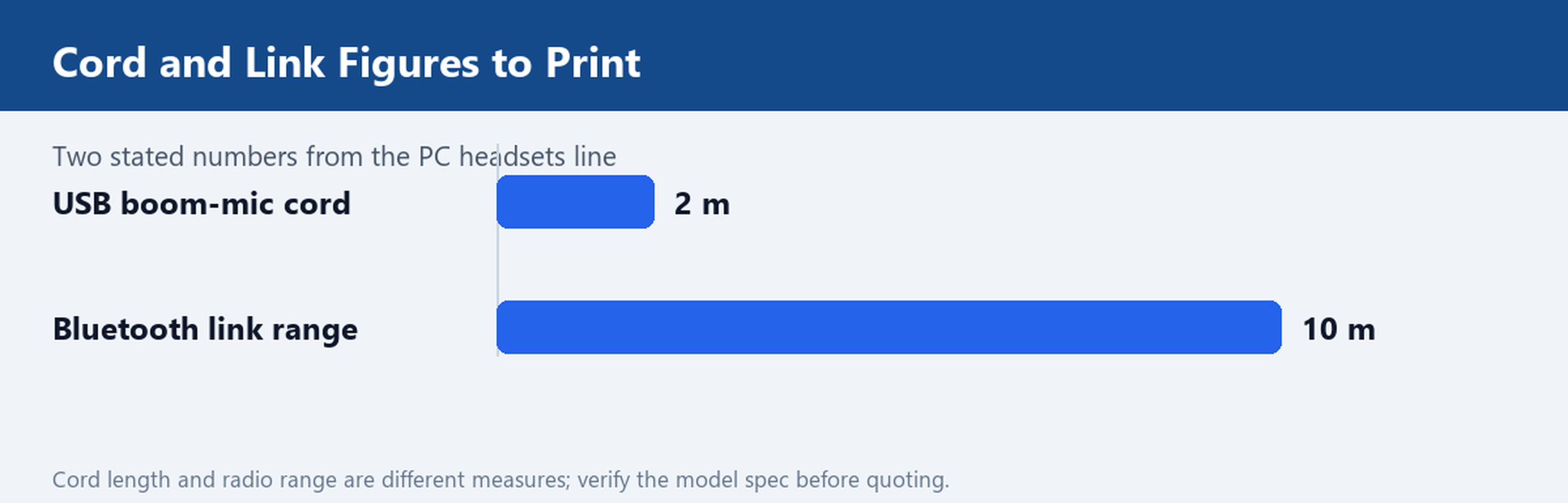
Three Signal Paths in One Category: USB, 3.5 mm and Bluetooth
Start by separating connection type from product family. A USB boom-mic headset carries both power and audio over one plug, so it behaves like a wired peripheral at the desk and needs no charging step in the warehouse. A 3.5 mm wood headphone is also wired, but its signal path ends at a socket and its impedance is fixed by the driver, which makes it a simple match for desks, monitors and audio interfaces that already expose a jack. A Bluetooth headband removes the cord and adds a cell, a pairing step and a radio range figure to the spec line. None of these products replaces the others in a mixed order; they answer different desk setups and different price bands. When you send a request for quote, list the quantity for each path rather than a single total. Ask the pc headset wholesale supplier to confirm the plug variant, the cord entry and whether retail packaging states the connection type on the outer box. Buyers who mix the three forms in one carton get a cleaner picking list and fewer returns caused by a headset arriving at a desk with no matching port or no charging routine.
The USB Boom-Mic Line: 2 m Cable, 145-Degree Mic and No Battery to Ship
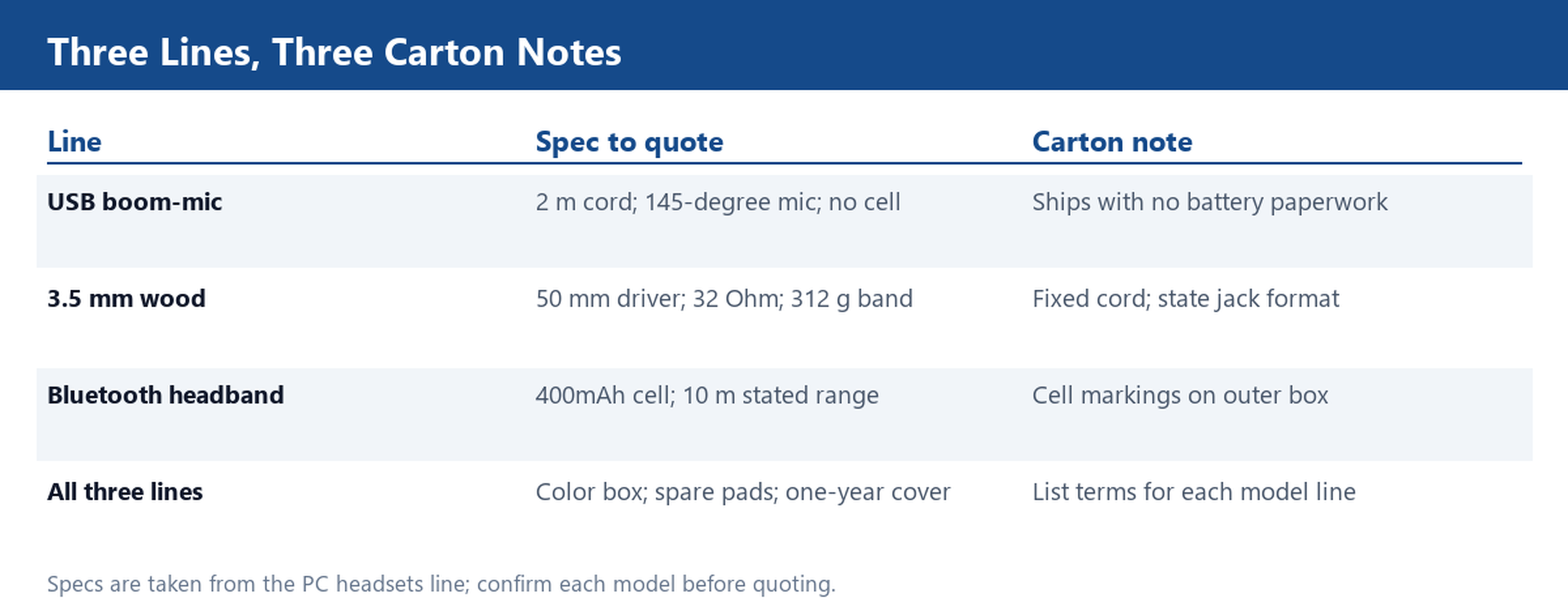
For shared desks and call rooms, the USB boom-mic line is easy to describe on a purchase order. The cord is 2 m, which gives a user room to sit back from a tower or a monitor arm without pulling the plug, and the microphone sits on a 145-degree boom so it can be parked close to the mouth and moved away between calls. There is no cell in this line, so no charging cable, no charge cycle and no battery note belongs on the carton label. That matters for a mixed shipment: the USB carton can be counted, weighed and stacked without the cell-related documents that follow a wireless line. Check two things before you confirm quantity. First, confirm that the plug on the model you are ordering matches the connector expected at the destination, since USB variants are not interchangeable in a spec sheet. Second, confirm how the boom is packed, because a bent mic arm is a common reason a wired headset is returned from a shared desk. If your order also covers desk audio, keep the wired headset line separate from the Computer Speakers line in the picking list so the two never share a carton count. State 2 m and 145 degrees on the spec line and the buyer has a figure to check on arrival.
The 3.5 mm Wood Headphone: 50 mm Driver, 32 Ohm and a 312 g Headband
The wood-finish headphone is the fixed-cord option in the category. Its 50 mm driver and 32 Ohm rating belong on the quote because they tell a buyer what kind of source the headphone expects: a standard jack output rather than a powered USB stage. The headband weighs 312 g, a figure worth keeping in the spec line when a desk setup is being planned for long sessions or for stacking in a shared drawer. Because the signal path is analogue and the cord is fixed, there is no pairing step, no firmware note and no cell to declare. The trade-off is that cord length and jack size become part of the acceptance check. Ask for the exact cord length and the plug format in writing before the order is placed, then check the first carton on arrival against that line. The Earphones category covers in-ear formats, while this headband sits in the over-ear wired group; keeping the two groups apart avoids a mixed carton where the buyer expected one fit and received another. For a mixed order, list the wood headphone as its own line with driver, impedance and headband weight side by side, so a warehouse can verify the model without opening the color box.
The Bluetooth Headband: 400mAh, 10 m Range and the Extra Carton Paperwork
The wireless line is the one that changes the documents as well as the desk routine. The headband uses a 400mAh cell, and the stated link range is 10 m. Both figures should appear on the line item because they describe what a user can expect when moving away from the source and how much charge is available before a recharging break. A cell in the carton brings extra steps: the pack list has to show that the headbands ship with their charge state recorded, and the outer box has to carry the markings required for goods with cells. Build those steps into the quote instead of adding them after the order is placed. Pairing is the other practical check. Ask whether the headband remembers the last paired device, and include a one-line pairing instruction in the retail bag so the first user does not have to guess. Keep the wireless line distinct from the wired lines in the mixed carton, because a single count across all three forms hides the cell paperwork and can hold a shipment at the door. The Audio / Video category gives a wider view of the surrounding range when you are planning adjacent lines, but the headband itself belongs under the PC headsets group for this order.
Mixed-Carton Rules: Color Box, Spare Pads and the One-Year Cover
Once the three lines are chosen, agree the carton contents in writing. Each model should have a color box with the model name and connection type printed on it, so a picker can tell a USB boom-mic from a 3.5 mm wood headband without reading the invoice. Spare pads belong in the same box, and the quantity of spare sets should be stated per model rather than per carton; a headband used at a shared desk wears pads faster than one kept at a single workstation. The written cover is the last line to settle. A one-year cover is easier to administer when the term is printed on the box and repeated on the quote, because the buyer can match a returned unit to the correct line without a long email trail. Do not let the three forms share one generic description. Write the cord length or link range, the driver or cell figure, the box contents and the cover term against each model, then ask for a carton breakdown that shows how many units of each form are packed. Questions about model mix can go through the Contact Us page with the line list attached. Send the model mix and quantity per model, and we will quote a mixed carton with the color box spec, spare pads and warranty terms listed per line.
