

Custom watch projects rarely stall on the idea. They stall on three specifications that were never fixed in writing: the dial, the SIM design and the cell. This custom smart watch oem brief lays out the order in which to decide them, using the display tiers, battery options and band choices already listed on our smart watch range. Fix these items before you talk about colours or packaging, because each one changes the board, the case or the carton. 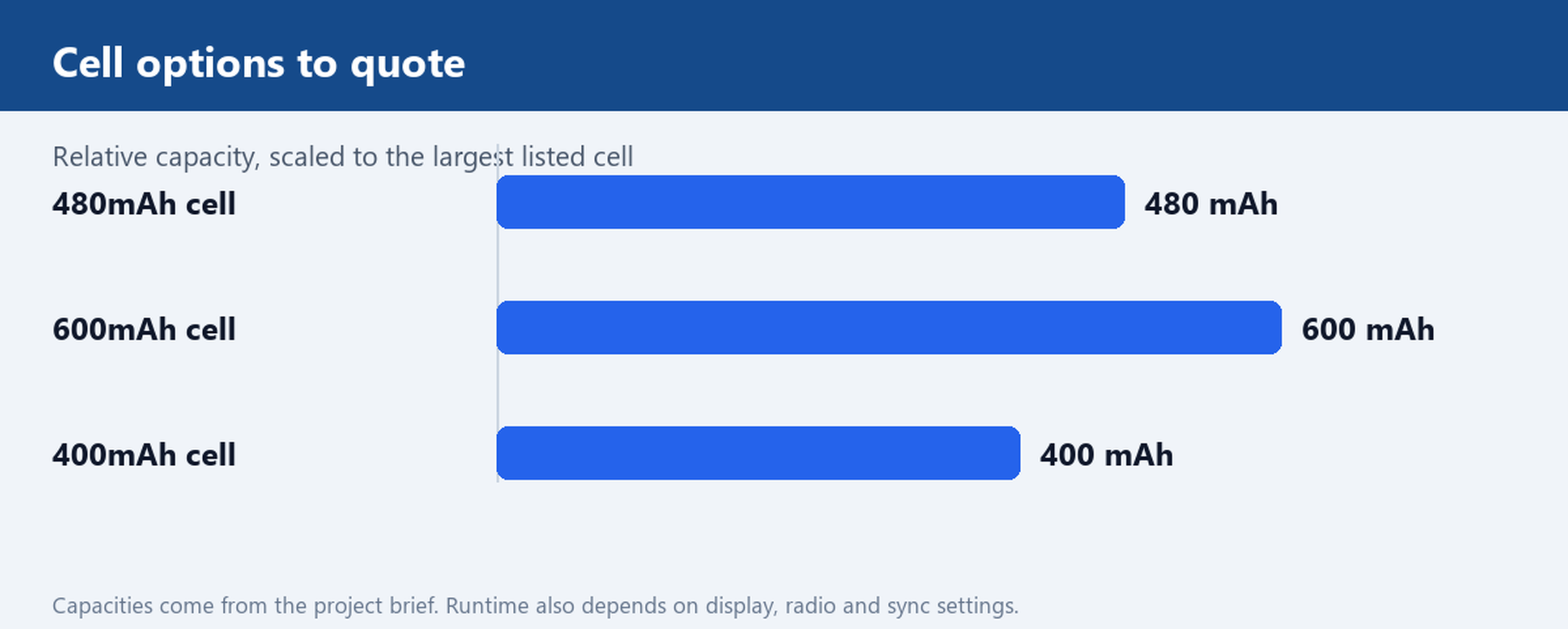
Three Dial Tiers and What Each One Changes Downstream
Start with the face your buyer will look at every day. The brief names three tiers: a 1.33-inch round dial at 360×360 pixels, a 1.54-inch 320×320 IPS panel and a 1.54-inch 320×240 TFT panel. They are not three labels for the same part. Pixel count decides how many menu items fit on one screen, how large the time digits can be drawn and how much detail a health widget can show without a second tap. The IPS option gives a wider viewing angle, which matters when the watch is read at a glance from the side. The TFT option gives fewer pixels and a lower panel cost, which can be the right call for a simple step and heart-rate display.
Ask for a face drawing at actual size, then place your logo and three screens of information on it. If the text wraps at 320×240, no amount of firmware tuning will make it fit. The dial choice also drives the glass, the touch layer and the case opening, so changing it after tooling starts is a new project rather than a small edit. Write the tier into the sample brief with both the diagonal size and the pixel count; a vendor who quotes only an inch size has left the resolution open.
SIM or No SIM: The Choice That Sets the Mainboard
The next decision is radio architecture. A watch that carries its own SIM needs a modem, an antenna layout, a card seat and a different approval path for each market it enters. Our listings show both shapes of product: a 3G SIM watch and a WiFi GSM watch sit beside Bluetooth paired models such as the heart-rate and GPS watch. Two watches can share a case outline and still need different boards inside.
Before you approve a board, write down where the watch will be used, which network bands matter and whether the buyer expects calls from the wrist or notifications from a phone. A no-SIM design pairs with the phone and keeps the radio stack and approval scope smaller. A SIM design adds independence from the phone, along with antenna tuning and a card seat that has to survive daily handling. Ask which version is intended for domestic sale and which is intended for overseas sale, then keep the two bills of materials apart. Mixing them later usually shows up as a board revision, not a label change.
Cell and Standby Claims to Put on the Sheet: 480mAh, 600mAh, 400mAh
The brief names three cell sizes: 480mAh, 600mAh and 400mAh. Put the exact capacity on the specification sheet and ask what test condition sits behind any standby statement. Runtime depends on how often the screen wakes, whether GPS or a cellular radio is active and how many notifications are pushed through the day. A buyer who compares two numbers without those conditions is comparing two different use cases.
For each cell option, confirm the charging method, the connector, the protection circuit and the physical space inside the case. A larger cell can change the balance of a round watch and the thickness of the back cover, so it belongs in the same conversation as the dial tier. Ask the supplier to describe the sample test: screen state, radio state and the interval between sync events. If those details are missing, treat the standby figure as a target to verify on your own sample rather than a finished claim for the box.
Bands, Buckles and Colourways That Ship in One Carton
After the board and cell are fixed, the visible differences become the cheapest place to build a product line. Band material, buckle finish and colourways can be mixed across one production run while the watch body stays shared. Specify strap width and lug fit on the drawing, then mark which colours go into which retail carton. A mixed carton needs a clear allocation list, or the buyer will open a box and find three shades that were meant for three separate shipments.
Decide whether the clasp is a pin buckle or a magnetic closure, and check that the logo on the buckle matches the logo on the dial. Colour names should refer to a physical sample kept beside the line, since the same word can describe two different shades on silicone and on leather. These choices are small per unit, but they are the parts a customer sees first, and they are far simpler to change than a display panel. 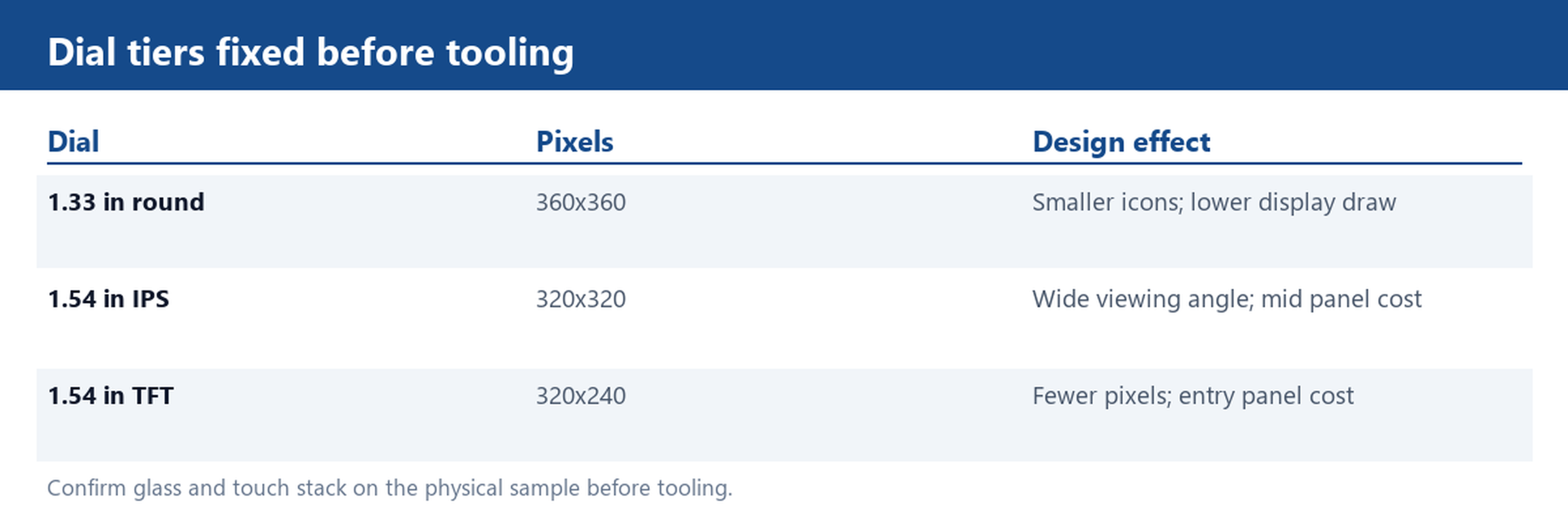
Sampling, MOQ and What the Gift Box Adds
Once the dial tier, SIM decision, cell size and band set are written down, request a sample with your logo on the dial and your artwork on the strap. Check the face at actual size, pair the watch with a phone or insert a card according to the chosen board, and run the same short test you will quote to your customer. Ask for the current minimum order quantity and how it changes when you mix several strap colours in one order. Confirm how long artwork approval takes before production starts, so the schedule does not begin while the box is still being designed.
The gift box is the last cost layer. An insert, a printed card and a carton mark can turn the same watch into a retail set or a corporate gift, but each addition needs its own artwork sign-off. Keep the insert text to the specifications you have verified, including the exact cell capacity and the display tier; do not carry over a standby figure you have not tested. If you want a starting point, our blog covers related watch selection topics, and the contact page is the place to send the finished brief. Send your dial size, SIM choice and band colourways, and we will quote a sample watch with your logo on the dial.
