

A car mount and a car charger rarely fail on the same day. In a fleet, a rental counter or a taxi dash, the mount usually gives up its grip first, the wireless pad degrades in the middle of the job, and the charger lasts until a socket or a spring contact goes loose. If you are pricing car accessory lifespan rather than working from another selection list, the useful question is which part fails first and what to check when it does. This guide follows the failure order on a vent-clip mount, a 15 W charging pad and a 12 to 24 V car charger, then turns that order into a replacement schedule you can stock against. The numbers quoted here come from model sheets and inspection notes already published on this site, not from a promise of years of service. 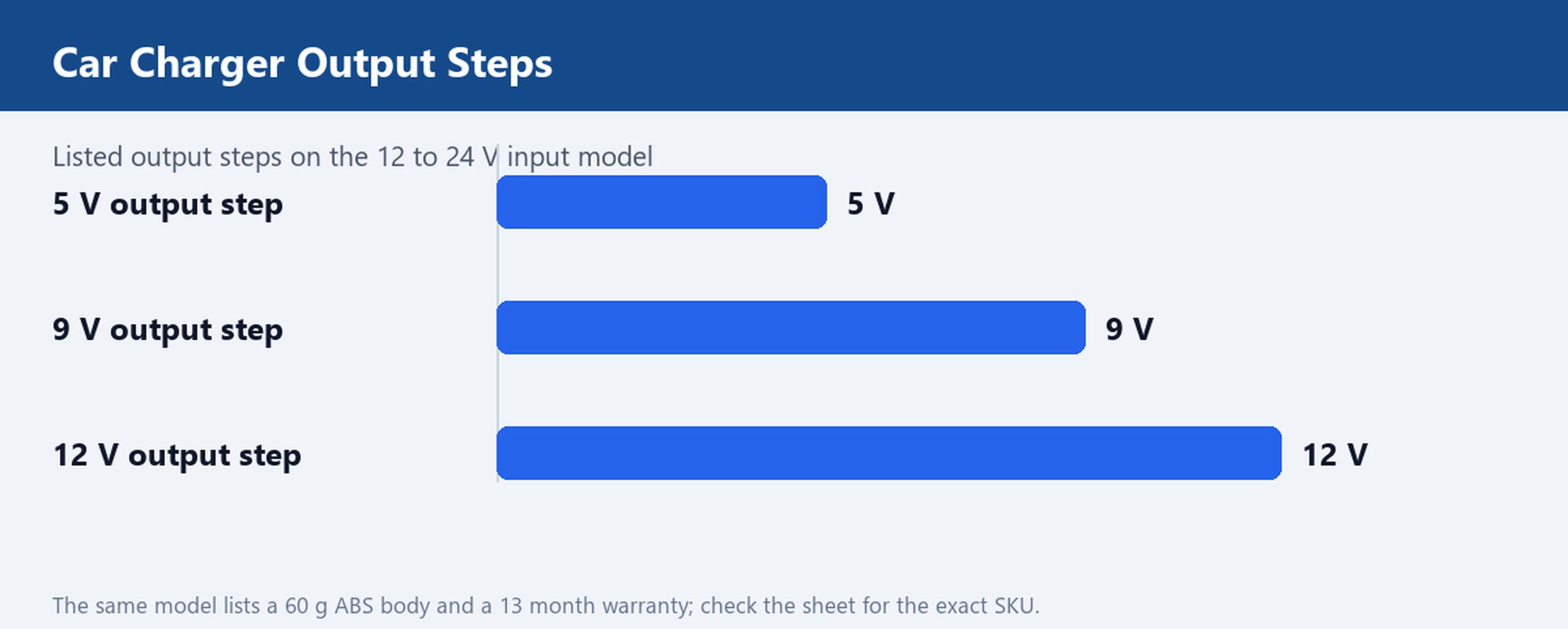
What fails first on a vent-clip mount: spring, jaw, ball joint or pad face
A vent clip is a hook with a spring behind it, sized around a slat thickness range. Fit is the first variable: the hook should close with the spring compressed, not bottom out on the slat. When the spring is compressed beyond its working travel on every installation, it loses tension and the phone begins to creep down on rough roads even though the clip is still seated. Ask for the slat thickness range on the vehicles in your order and measure the gap before you blame the phone.
The jaw is the next failure point. On an auto-clamping air vent phone mount, the phone itself pushes the arms open, so a thick case needs more insertion force. If one arm binds, the arms close unevenly and the phone sits off centre on the coil. The 360 degree ball joint on units such as OKC4890 lets the phone switch between portrait navigation and landscape forms; for the full car accessories range, check the joint and the clamp together when the angle will not hold. The pad face is last: a glazed or dirty surface lets the phone slide sideways even when the clamp is tight. Clean the pad and check the case before replacing hardware.
The 15W charging pad: coil heat, foreign objects and thick phone cases
A 15 W rating describes the input to the coil, not the power that reaches the battery. Heat is what ages the pad: a thick case or an off-centre phone lowers coupling, so the coil works harder for the same charge and the pad runs hotter. On a smart sensor auto-clamping R2 mount, the sensor is there to detect an object on the pad; a coin or a key left between the phone and the coil is a foreign object that should stop charging, not quietly warm up. Test that behaviour with a metal object on the bench before the units go into a vehicle.
Check pad alignment with the reference phone you actually issue, with its case on. If charging is slow only with a case fitted, the fix is positioning or a thinner case, not a new charger. A Qi wireless charger used on the dash should sit flat and stay clear of vents that blow directly across the coil. Log the case thickness used in the test so the next batch is checked against the same reference.
Car charger internals: 12-24V input, a 60 g body and where the heat goes
The charger in this line lists 5 V, 9 V and 12 V output steps, a 12 to 24 V input, a 60 g body, an ABS shell and a 13 month warranty. The input range is the specification that decides where the unit can be used: a 12 to 24 V input covers a passenger car and a truck cab with the same SKU, so test it in both if both are in your market. The short, light body matters because a charger that does not seat fully in the socket can rotate loose and lose contact.
Heat concentrates at the USB socket and at the spring contact inside the lighter socket, which is why a charger that fails is usually one of those two parts rather than the electronics. A spring contact that has lost tension or a USB socket that has been worked loose is visible on inspection. Reseat the unit fully, check that the contact is firm, and retire the piece if the socket has play. After a run of hot days in a parked cabin, repeat the check on a sample rather than assuming the whole carton is sound. 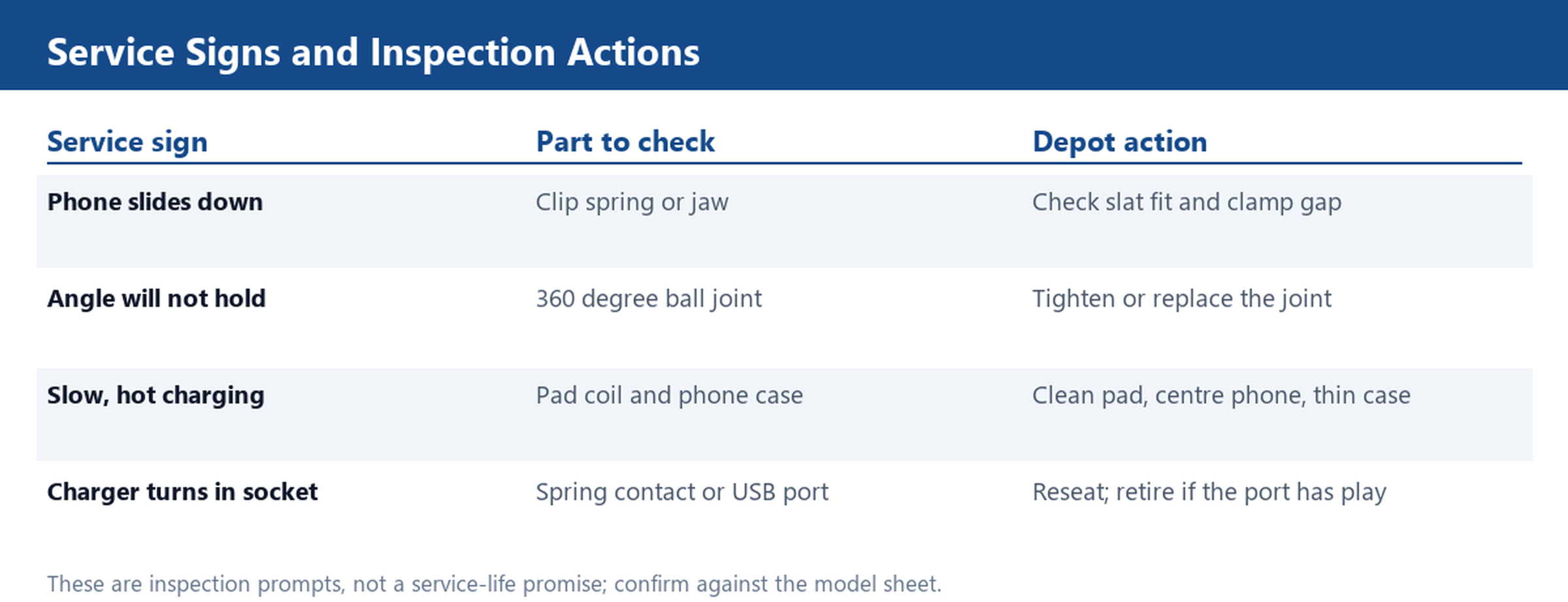
Reading a 13-month warranty against real duty cycles in a hot cabin
A 13 month warranty on the model sheet is a claim window, not a statement of service life. Two fleets can buy the same charger and see very different results because duty cycle is different: a rental counter that hands a mount over ten times a day works the jaw and the spring far harder than a company car left on one vent for a year. A hot cabin accelerates everything that is already going wrong, from a glazing pad to a loose socket.
Keep the record that makes a claim usable: installation date, vehicle type, slat thickness, case thickness, which socket the charger occupies and the complaint that triggered the swap. The contact page and order tracking pages are where those records get matched to a shipment. When a claim keeps recurring on one vehicle type, treat it as a fit problem to solve at specification time rather than a warranty line to absorb.
A replacement schedule for a fleet, a rental counter or a taxi dash
Do not schedule replacements by calendar alone. Schedule an inspection, then replace on condition. At each service interval, check four things: does the clip hold with the spring compressed, does the ball joint hold the chosen angle, does the pad charge the issued phone with its case on, and does the charger sit firm in the socket with no play at the USB port. Record a pass or fail for each, and you will see the failure order in your own vehicles rather than in a generic chart.
Set the reorder point from that cadence. The number of spares must cover the interval between orders, plus the growth in vehicles; the order quantity is that number plus the new units. Keep mounts, pads and chargers as separate spares so one failed spring does not take a charger out of service. Send your fleet size and we will quote mounts and chargers with a spare-part list.
